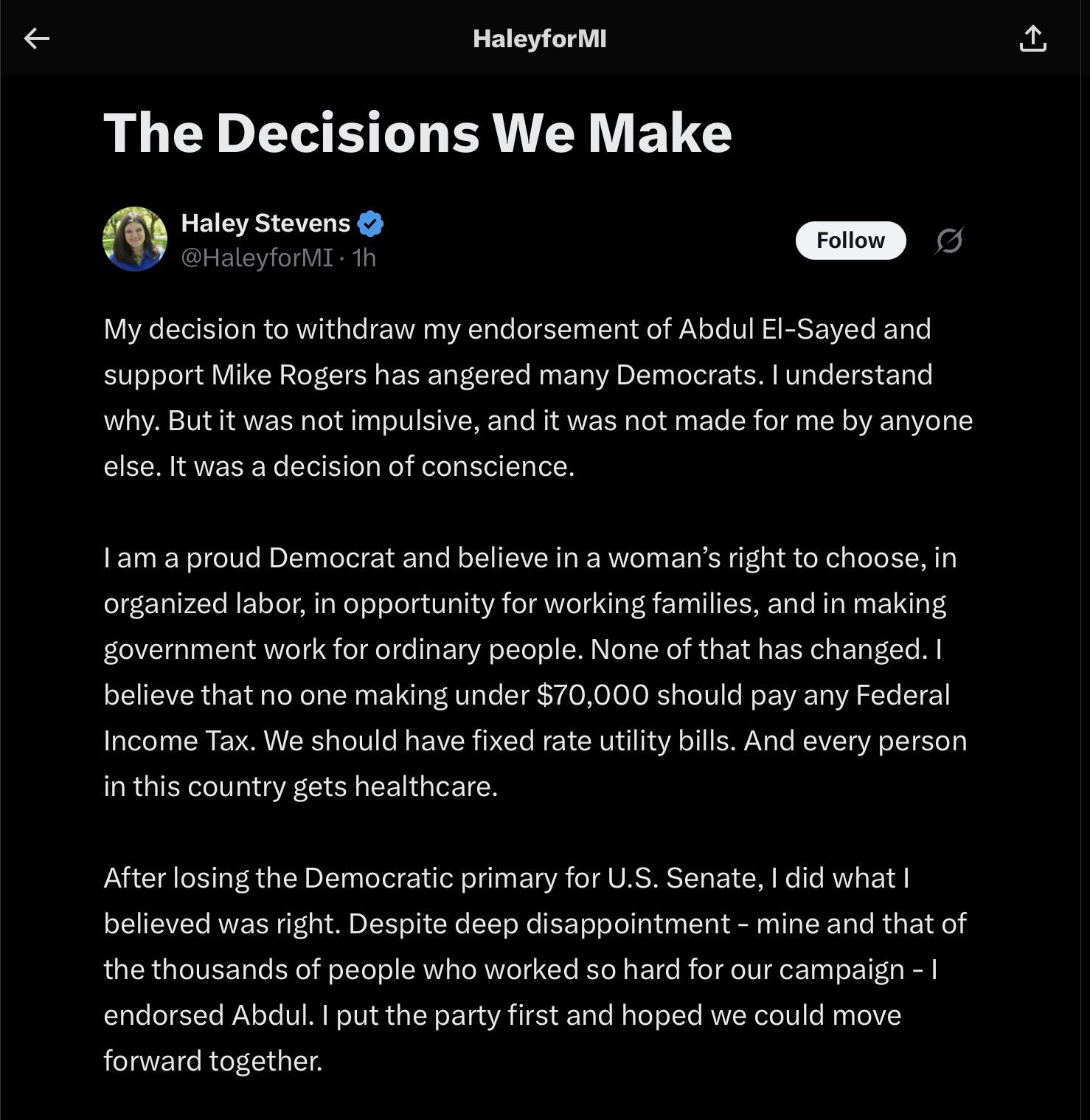
A high-stakes political realignment in Michigan has ignited widespread backlash across state lines, leaving political observers stunned and party members calling for accountability. Former Representative Haley Stevens released a lengthy statement addressing her controversial decision to rescind her endorsement of Democratic nominee Abdul El-Sayed and instead throw her support behind Republican Mike Rogers. The move follows months of primary friction, campaign disputes, and escalating rhetoric over foreign policy, particularly concerning the ongoing conflict in the Middle East.
In her multi-page statement, Stevens outlined a series of grievances that she claimed left her with no moral alternative but to back the opposing party's candidate. She pointed to campaign disagreements, unaddressed advertisement controversies, and a break in personal working relations. Despite acknowledging that Rogers opposes core legislative priorities she has long advocated for—such as labor protections and reproductive rights—Stevens expressed hope that he would govern as a moderate, drawing comparisons to late bipartisan figures.
The response to Stevens' announcement was immediate and sharp. Observers and community members pointed out the logical contradiction of abandoning key policy platforms over personal and campaign disputes. Critics characterized her defense as an attempt to shift blame rather than take responsibility for a unprecedented political pivot, with many highlighting how her statement prioritized grievances over the broader agenda she claimed to champion.
Reactions were particularly scathing regarding the contrast between her stated values and her ultimate political choice:
"Mike Rogers is against EVERYTHING she says she stands for in her second paragraph. Abdul El Sayed criticized our governments support of a foreign country. These are n't equal differences of opinions."
The political fallout extends far beyond public opinion. Reports surrounding the decision indicate significant internal campaign turmoil, including staff resignations leading up to the announcement. Observers noted that the decision appeared to burning long-standing political bridges, effectively alienating her former base and institutional support within the party.
"Her actions spoke louder than her words There's no need to read this"
Further fueling public skepticism was the phrasing and presentation of her published statement itself. Numerous readers and commentators commented on the overly formal, disjointed structure of the defense, raising questions about how the statement was drafted during the unfolding crisis.
"The underlying reasoning is hers, yes. But the writing is certainly AI -- whether in whole or part, I don't know, but there are several very obvious tells."
As the political landscape settles, Stevens' endorsement of Rogers stands as one of the most surprising cross-party moves of the election cycle. Whether the choice will influence moderate voters or permanently sever her ties with party leadership remains to be seen, but the immediate reaction underscores a deepening divide over party loyalty, campaign ethics, and international policy.